
11 hr
Mixquic Day of the Dead Evening Tour from Mexico City
Journey to a legendary town where ancient traditions honor the departed with candles, marigolds, and celebration
Reserve
Hand-picked by our editors — only the best 5 experiences from 12 reviewed.
Verified partners for every tour, free cancellation where available, and instant confirmation on every booking.
11 hr
Journey to a legendary town where ancient traditions honor the departed with candles, marigolds, and celebration
Reserve
11 hr
Journey to a historic village for an authentic Día de Muertos celebration with altars, rituals, and candlelit traditions
Reserve
8 hr
Witness Mexico's most sacred tradition with cemetery visits, illuminated landmarks, and a canal boat ride
ReservePrices from verified partners. Availability updates in real time at checkout. Free cancellation policies apply where shown.
The landmarks, rooms, and views travelers on this tour remember — all visible on a single visit.
A 16th-century Augustinian structure built atop a pre-Hispanic ceremonial site, serving as the heart of the community.
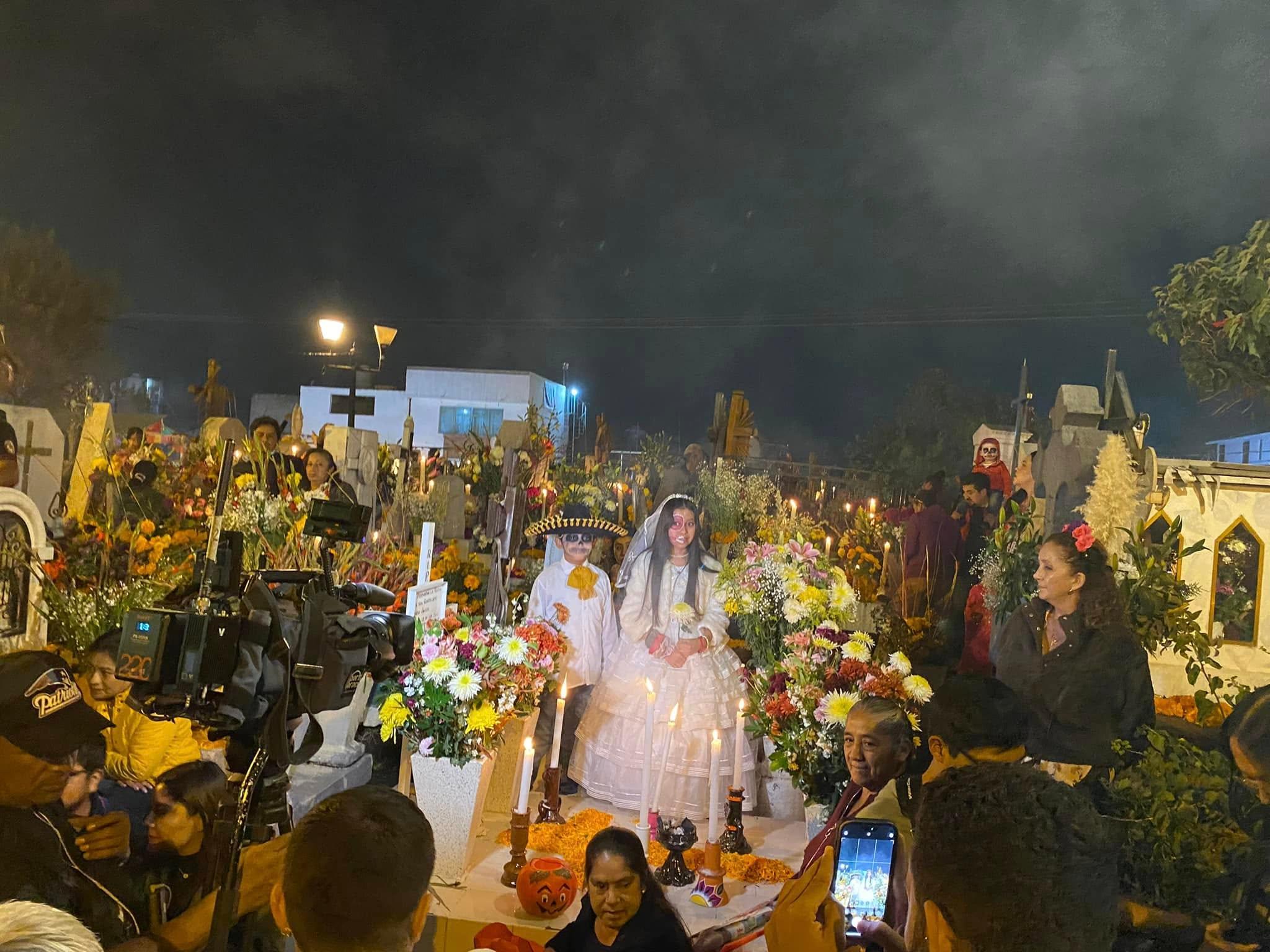
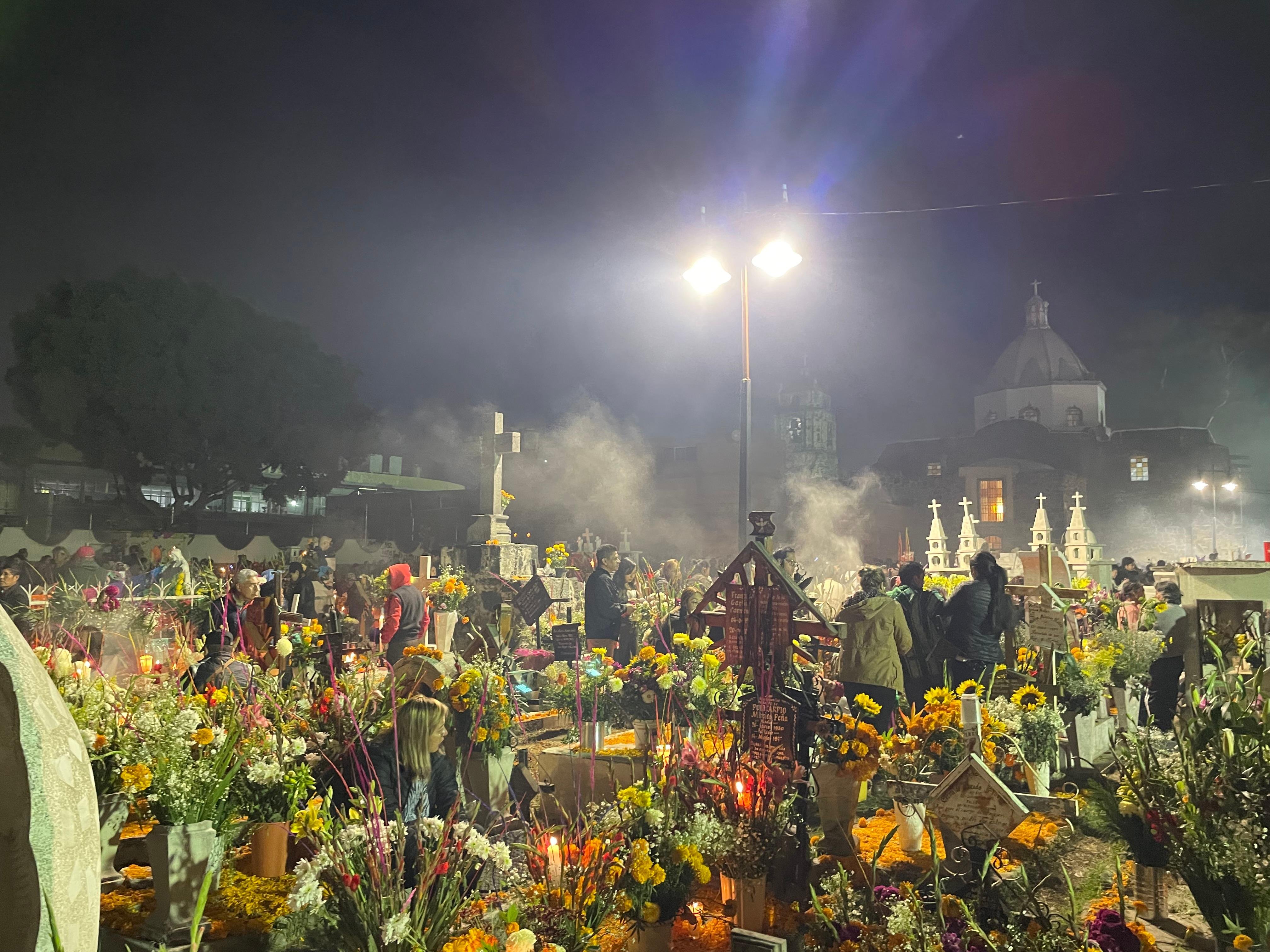
This iconic cemetery features tombs transformed into personalized altars with thousands of candles and marigolds.
An ancient artifact displayed in the church atrium, reflecting the site's deep pre-Hispanic roots.
Stone rings preserved in the church atrium, remnants of the ceremonial ball game practiced in ancient Mixquic.
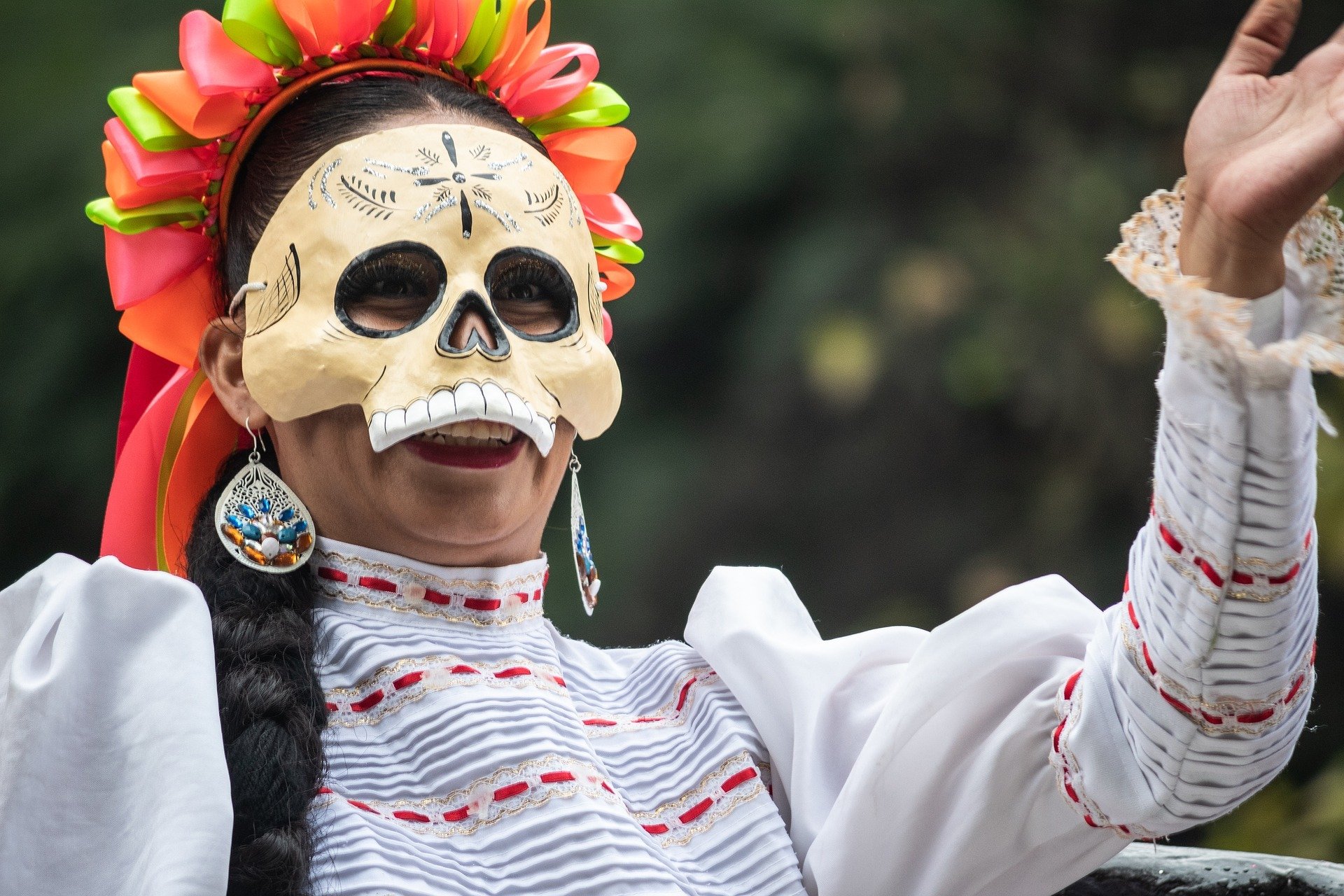
Artistic offerings found throughout the village streets, showcasing traditional sawdust carpets and cempasúchil flowers.
They serve different purposes; Mixquic offers a somber, authentic ritual experience, while Xochimilco provides a lively, social celebration on the water.
| Feature | Top pick Mixquic Cemetery | Xochimilco Boat Tour |
|---|---|---|
Atmosphere |
Solemn and traditional | Festive and loud |
Primary Activity |
Observing Alumbrada cemetery lighting | Trajinera boat party |
Cultural Depth |
High focus on burial rites | High focus on social celebration |
Crowd Intensity |
Dense congregation at gravesites | High density on canal waters |
Travel Logistics |
Requires bus or private shuttle | Requires taxi or public transit connection |
| See tickets → |
Verdict: Those seeking the genuine Day of the Dead tour in Mixquic from Mexico City tours should prioritize the cemetery rituals, whereas those desiring a social event may prefer day of the dead tour in mixquic from mexico city tickets for a boat cruise, though one should compare day of the dead tour in mixquic from mexico city tour options carefully before booking.
Choose your ticket, select your date, and reserve in under two minutes. Secure checkout handled by our verified partner.
Instant confirmation by email, with a mobile voucher you can save offline. No printing, no queuing at a collection desk.
Arrive at the entrance, show your voucher on your phone, and walk in. Most tickets include priority or skip-the-line access.
Practical details for your visit straight from our verified partners — hours, access, rules, and how to get there.
Wear comfortable, sensible shoes suitable for walking over uneven, unpaved surfaces. Bring a sweater or jacket as evenings in Mixquic can be cool.
Keep a close watch on personal belongings as the area becomes extremely crowded. Use theft-proof bags and avoid carrying unnecessary valuables.
Photography of shrines and festival decorations is encouraged, but always ask permission before photographing individuals. Refrain from using flash inside the cemetery.
The village streets and cemetery grounds feature historic, uneven, and unpaved terrain. This location is generally not considered wheelchair accessible.
This destination is family-friendly, though note that the area experiences significant crowds during the event. Children 2 and younger are often complimentary on organized tours.
Numerous food stalls and small restaurants are available throughout the town. Always verify prices at casual establishments before placing an order to avoid overcharging.
Best time to go, insider tips, nearby landmarks, and the cancellation fine print — flip through to skim what matters to you.
Flexible, no hidden fees.
For a full refund, ensure you cancel at least 24 hours before the scheduled departure time. Entry to the cemetery grounds is 0 MXN.
San Andrés Mixquic holds the oldest continuously observed Día de Muertos vigil in the Valley of Mexico, a tradition documented since 1542 when Augustinian friars recorded indigenous families laying marigold petals across pre-Hispanic burial mounds. The settlement predates the Spanish conquest by eight centuries. Its name derives from Nahuatl Miquiztli, meaning "place where death dwells," a designation that reflects the site's sacred function as a ceremonial necropolis for the Chalca people. The Alumbrada ceremony unfolds each November first across the atrium of the sixteenth-century Convento de San Andrés and the adjoining municipal cemetery. Families arrive at dusk to construct elaborate altars directly atop graves, arranging cempasúchil arcs, papel picado banners, and offerings of mole, tamales, and pan de muerto. By nightfall, thousands of candles transform the cemetery into a field of flickering light visible from the surrounding volcanic plains. The ritual follows a precise choreography unchanged for generations: bell tolls at six signal the lighting of the first votive, prompting a wave of flame that spreads plot by plot until the entire grounds glow amber. Day of the dead tour in mixquic from mexico city departures typically leave the capital between three and four in the afternoon, allowing arrival before the evening crowds. The journey crosses the volcanic remnants of Lake Chalco, passing chinampas and agricultural pueblos that preserve a landscape largely erased elsewhere in the metropolitan zone. Guides provide context on syncretic burial customs and the role of death iconography in Mesoamerican cosmology. The Convento's stone facade bears remnants of Augustinian frescoes, and its cloister houses colonial-era ossuaries that predate modern cemetery practice. Mixquic remains one of fewer than a dozen sites in central Mexico where Día de Muertos retains its function as a communal funerary rite rather than a tourist spectacle. The absence of an entrance fee reflects the ceremony's status as a living tradition open to all who approach with respect. Evening temperatures in Tláhuac drop sharply after sunset; layered clothing and closed footwear are necessary for navigating the uneven cemetery paths.
"By nightfall, thousands of candles transform the cemetery into a field of flickering light visible from the surrounding volcanic plains."
A step-by-step walkthrough of the visit — what you'll see, how long each stage takes, and the details that matter.
You board in the late afternoon, crossing the southern districts as the capital's urban density gives way to the agricultural belt of Tláhuac. The forty-kilometer route follows the ancient causeways that once connected island settlements across Lake Chalco. Your guide explains the Nahuatl origins of Mixquic and the ritual calendar that structures the two-day observance. You arrive as families begin arranging ofrendas atop family plots, constructing three-tiered altars with photographs, sugar skulls, and ceramic incense burners. Marigold petals form geometric paths from grave to grave. The scent of copal resin drifts across the cemetery grounds. You walk the perimeter of the Convento atrium, observing preparations as vendors sell candles and papel picado from wooden carts. At six, the church bells toll and the Alumbrada begins. Flames multiply across the cemetery in concentric waves. You stand among the graves as families recite prayers in Spanish and Nahuatl, their voices carrying across the candlelit necropolis. Musicians tune guitars near the stone cross that marks the cemetery's colonial core. The day of the dead tour in mixquic from mexico city schedule allows two to three hours on-site before the return journey, enough time to witness the lighting ceremony and observe the vigil's opening hours. You depart as the last light fades from the Ajusco peaks.
San Andrés Mixquic is open daily from 00:00–23:59, providing constant access to the public town and cemetery areas.
Prices for a day of the dead tour in mixquic from mexico city vary depending on the operator and private or group options selected.
Yes, it is a family-friendly cultural event, though visitors should be prepared for very large crowds.
The recommended arrival window for a day of the dead tour in mixquic from mexico city is 16:00–20:00 to secure a spot before peak evening activities.
While general items are allowed, please avoid bringing large tripods or drones that may disturb other visitors during the day of the dead tour in mixquic from mexico city.
Photography is permitted, but please be respectful and avoid using flash when photographing local families or individuals during your visit to San Andrés Mixquic.
Most visitors reach the town via organized tours from Mexico City, though independent travelers can use local metro and taxi transfers.
There is an entrance fee of 0 MXN for the town and cemetery grounds of San Andrés Mixquic.
Pack comfortable shoes, a jacket for the evening, small-bill cash for local vendors, and a rain poncho for your day of the dead tour in mixquic from mexico city.
For a full refund, you must cancel your day of the dead tour in mixquic from mexico city tour at least 24 hours before the scheduled departure time.